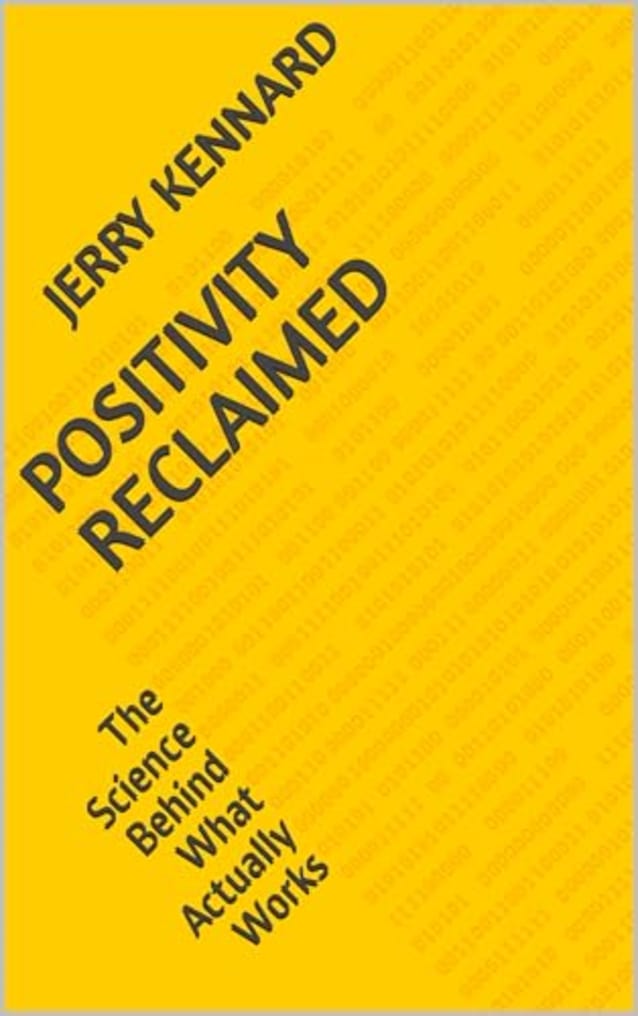
Positivity Reclaimed: The Science Behind What Actually Works
About
The positivity industry has been lying to you. Not about everything — but about enough to matter.
You’ve been told that positive thinking attracts positive outcomes. That gratitude practice will transform your life. That the right mindset is both necessary and sufficient for success, happiness and resilience. That if you’re still struggling, you’re simply not positive enough.
None of this is what the science actually says.
Positivity Reclaimed is written by a psychologist. Someone who has spent years as a genuine advocate for positivity, watching with growing concern as a serious scientific discipline was systematically distorted into something that misrepresents its own foundations and causes real harm to the people it claims to serve.
This is not a book that tells you positivity doesn’t work. It’s a book that tells you why the version you’ve been sold doesn’t work — and what the evidence shows actually does.
What you’ll discover inside:
The real findings of positive psychology — what Martin Seligman’s landmark research actually established, and how far the popular account has drifted from it.
Why positive thinking frequently makes things worse — the neuroscience of emotional suppression and why trying not to feel negative is one of the least effective strategies available.
The manifestation myth — what the research on visualisation actually shows, and why positive fantasy is associated with lower motivation and worse outcomes than honest thinking.
What gratitude practice actually requires to work, and the specific ways the popular version has been turned into a sophisticated form of self-gaslighting.
The real foundations of resilience — which have almost nothing to do with mindset and almost everything to do with relationships.
Why happiness pursued as a goal consistently eludes the people pursuing it — and what the research on hedonic adaptation tells us about where genuine wellbeing actually comes from.
What genuine optimism looks like — the critical distinction between evidence-based positive orientation and the wishful thinking that positivity culture promotes in its place.
The role of meaning, acceptance and honest engagement with difficulty in a life that is genuinely worth living.
And what a mature, research-grounded positivity actually looks like in practice — in relationships, in habits, in the face of grief, failure and difficult transitions.
This book is for you if:
You’ve tried the practices — the journaling, the affirmations, the visualisation — and found that the promised transformation didn’t materialise.
You’re suspicious of the happiness industry but don’t want to abandon the genuine insights of positive psychology along with its distortions.
You’re a psychologist, therapist, coach or practitioner who works with positive psychology frameworks and wants a resource that represents the research honestly.
You’ve experienced significant adversity and found the positivity industry’s response to it somewhere between unhelpful and actively offensive.
You want to understand what the science actually shows about human flourishing — without the commercial packaging, the oversimplification and the implicit blame structures that come with most of what’s currently available.
This book is not for you if:
You’re looking for another set of positive thinking techniques and daily practices that promise rapid transformation.
You want to be told that attitude alone determines outcomes and that the right mindset will deliver the life you want.
You’re not prepared to engage with an account of wellbeing that is more demanding, more honest and more complex than what the self-help section typically offers.